

A Close-Up Encounter: A Macro Photography Adventure
Introduction
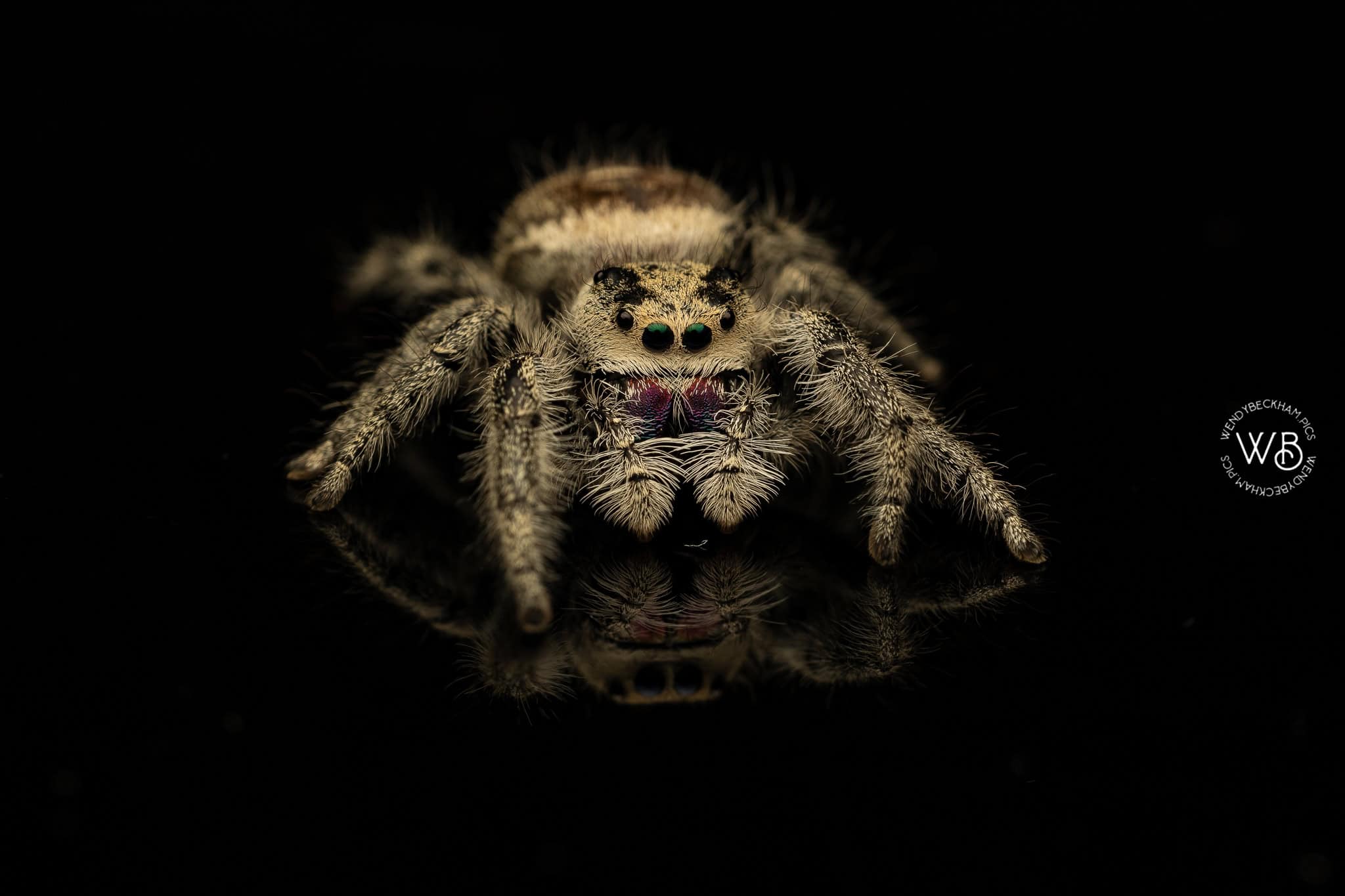
Have you ever wanted to explore the hidden world of tiny creatures, i have and i was kindly invited over to a friends house who owned these tiny spiders, she lent me the equipment to try my hand at photographing her amazing spiders, their intricate details and unique behaviors? Macro photography allows us to do just that, magnifying the mundane into the extraordinary. Today, we’re diving into the fascinating world of jumping spiders, captured beautifully in this stunning macro photograph.
The Subject: A Jumping Spider
This image showcases a jumping spider, a species known for its remarkable agility and predatory instincts. With its large, forward-facing eyes, these spiders can accurately judge distances and pounce on their prey with incredible precision. The intricate details of its body, from its hairy legs to its distinctive coloration, are brought to life through the art of macro photography.
The Art of Macro Photography
Macro photography requires a specific set of techniques and equipment. To capture images like this, photographers often use specialized lenses with a high magnification ratio. These lenses allow them to focus on subjects that are extremely close, revealing tiny details that are invisible to the naked eye.
Additionally, proper lighting is essential for macro photography. Soft, diffused light helps to highlight the texture and detail of the subject, while avoiding harsh shadows. In this particular image, the use of dark lighting creates a dramatic and mysterious atmosphere, emphasizing the alien-like appearance of the jumping spider.
Why Macro Photography Matters
Beyond its aesthetic appeal, macro photography serves a valuable purpose in scientific research and education. By capturing the intricate details of plants, insects, and other small organisms, photographers can help scientists study their behavior, life cycles, and ecological roles.
Moreover, macro photography can inspire a sense of wonder and appreciation for the natural world. It allows us to see the beauty and complexity of creatures that we often overlook, fostering a deeper connection to our environment.
Conclusion
I am very proud of this macro photograph of a jumping spider is a testament to the power of photography to reveal the hidden wonders of our world. By capturing the intricate details of this tiny creature, the photographer has invited us to explore a fascinating and often overlooked aspect of nature.
So, the next time you’re out in nature, take a moment to look closely at the world around you. You might be surprised by what you discover.
A Tiny Giant: The Actual Size of the Jumping Spider
While this macro photograph may make the jumping spider appear quite large, it’s important to remember that these creatures are incredibly small. In reality, many jumping spiders are no bigger than the eraser on a pencil!
The art of macro photography is all about magnifying the subject, allowing us to see details that are otherwise invisible to the naked eye. This technique can sometimes create a distorted perception of size, making objects appear much larger than they actually are.